Monday, November 17, 2014

Forest stewardship and chipotle peppers

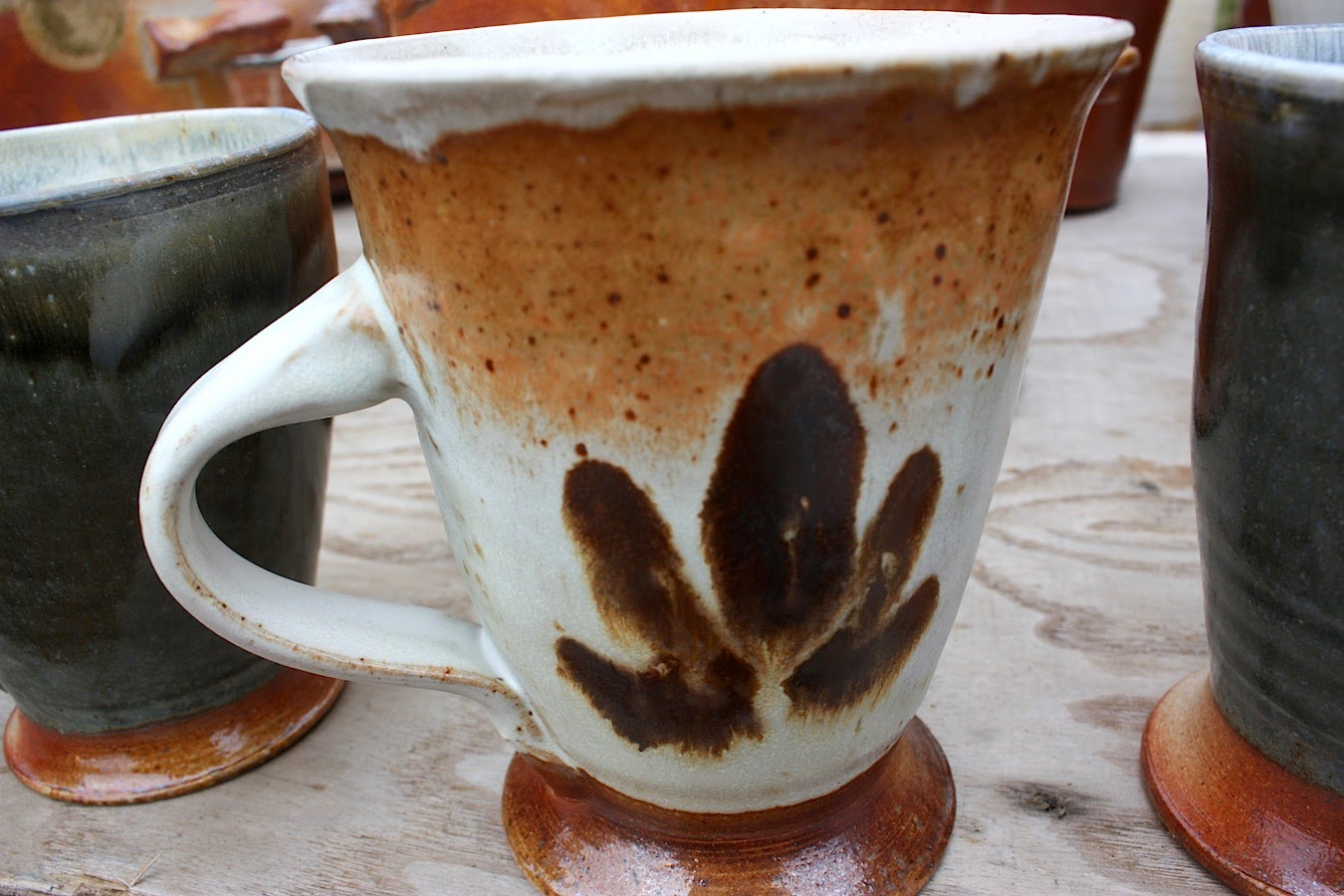
Work Horse.
     I feel somewhat absent, digitally. Work in the studio has been interrupted, well, what's a nicer word? "enhanced" by the end of the gardening season. Time not spent in clay has been spent in the dirt in the raised bed garden and that, plus work on a small structure for my elderly mother, keeping up with Medicaid guidelines, discussions with lawyers about all sorts of issues including internet-related activities (state vs. federal statutes), personal bookkeeping, broken water lines that needed to be repaired – twice– and all the fun that goes with destructive dogs has kept me from updating blogs, Twitter accounts, Facebook pages, Etsy listings and the like. In the garden, we ended up with a boatload of peppers – jalapeƱo, basilla and cayenne, from plants grown from seeds that I swore were never going to produce much earlier in the year since they didn't even flower until mid-summer despite the fact that they were the first plants in the ground last Spring. Eventually they did flower and wham! Peppers everywhere. 
     And then... the tomatillos took over. They are magical plants. They grow like weeds. The fruits seem to get large and ripen when you're not looking. Quite a number of them fall off the plant on the ground and you'd swear you're about to pick up a rotted one but instead, you've found the juiciest, largest fruit. Much salsa was made. I tried tomatillo salsa with and without cooking the tomatillos. The major difference is in the moisture content and more subtle flavor of the cooked tomatillo salsa. I think I prefer the fresh salsa. After harvesting the peppers and tomatillos, we prepared the beds, added more compost and planted some kale, spinach, shallots and garlic. We're curious to see how well the shallots do. We're considering some alternative produce and value-added products in the future such as shallots, asparagus and tomatillos plus pickled beets, dilly beans and chipotle peppers. (Just say yes to pickled beets! Oh my god, I made the most awesome batch with my herbs.) And we finally fixed the deer fencing around the perimeter of the garden. I will say having a tractor makes some tasks easier although this year's gardening has been limited to the raised beds. Next year, we may scout out locations on the farm to plant in larger quantities in the future. 

     We are embarking on a new plan of action on the farm. We recently contacted the state forestry service to draw up a plan to manage our property that makes the most of the mix of the pastures and the forested areas. In addition to micro-farming some alternative crops like shallots, asparagus, beets and peppers for smoking, we're also looking to manage this property as a natural sanctuary that maintains a balance of healthy forest and efficient pastures. We want to encourage growth of good woods like walnut, oak, maples, ash and as it turns out, persimmon, along with native understory trees like flowering dogwoods, for aesthetic value and for the benefit of wildlife. With that, we will be culling trees that are actually prohibiting healthy forest growth by crowding other trees light and or promoting rot at their base. By cutting trees that have base rot from earlier broken growth called "rain catchers" we can get some benefits out them: some can become firewood for us (or we can sell it), some oak logs can become useful for growing and harvesting mushrooms and some trees can be purposely killed without taking them down so as they die, the bark separates from the heartwood and allows other animals to use the dying tree as habitat.
     The pastures will be slowly reclaimed after being neglected for so long. We'll be re-fencing several areas and re-partitioning sections for more efficient rotation of grazing. We'll be trimming back the edges of each pasture over time. This is where the tractor will be utilized and appreciated the most. At some point, I'd like to reintroduce the milkweed that has gone missing since farmers around here have gone herbicide happy. Maybe we can make this little spot an oasis for bees and butterflies again.
     Suffice to say, all the pasture, wood and garden work adds to the work I do in the studio and cuts into my digital time. Sometimes I worry that I'm not making enough noise on the internet but not really. Life is so much more than what transpires on a glowing screen.

Friday, October 10, 2014

Bobtown Art October Wood/Soda firing

     Another gathering at the soda kiln for the Bobtown Arts wood firing last weekend. Beautiful fall weather if a bit cold and blustery on the day of loading. Color is just starting to turn everything in the hills near Berea, KY. The firing went well, flattened cone 10 up top and bent it on the bottom. We added 5.5# of soda at about 2100°F and then soaked it for some time with wood and an oil drip. Some great results firing with Clarence Hayes, Bruce and Kelley Hoefer or Turning Wheel Pottery and Philip Wiggs. Looking forward to another firing. I've also been busy making work for local sales in galleries in Midway and Berea, plus it looks like I'll be doing a demonstration at the Kentucky Artisan Center in December. Busy, busy busy.
Peeking in.
Open door.
Top toasty shelf with Phillip Wiggs coffee pots.
Leaning tower of bagwall...
All gone!


Creep crawly slips and shinos...


Love the colors on the sugar maples!

Thursday, September 11, 2014

Mindfulness and Making Work with Your Hands

From the blog, On Being


"Our destiny is written in the hand."—Renate Hiller,
co-director of the Fiber Craft Studio at the Threefold Educational Center in Chestnut Ridge, New York

Reflect


Twin Towers, 1988
8x10 BW photo on Ilford paper,
photo oils, colored pencils


Wednesday, August 27, 2014

Mental weirdness

Fall approaches 
     In daily life, social interaction involves some unspoken cultural rules. This contact and social interaction creates rigidity and patterns, repetition, practice. Mental exercise can exhaust me as much as physical work. When I'm at a show or in public, even amongst friends, if the gathering is too large, I feel "on" and aware of my behavior and the perceived expectations of others. It alters and influences my subsequent words and actions regardless of my intention that it not influence my behavior. If the group is small, say one-on-one or -two, my brain relaxes as the "rules" lessen. So that means –sometimes– that when I am alone but not meditating, my mind relaxes yet is still stimulated. I let it free associate. Wild ideas come out. Odd pairings of words or sounds. Since it's just me and the cats and dogs most afternoons, I'll occasionally speak these things out loud and try to uncouple what I say from  intention and see what happens. If I'm feeling industrious, I'll write it down in a notebook. The act of writing, adding that motor skill, changes the free association even more. I try to expand the absurdity and let words and sounds affect the next word or sound without logic. Like playing with my neural connections. My notebook reads as if I'm on some powerful drugs. I suppose it's my way of letting my brain relax in a hot tub. 

     Or I'm practicing my dementia. 

     Namaste, y'all.

Tuesday, August 26, 2014

Fungus time

     Wet, and rainy recently. Very humid, hot days help the fungus come alive on the forest floor. At first when I took the dogs for a walk, I didn't bring my camera but I spotted so many different varieties I ended up grabbing my camera and doing the walk twice which pleased my dogs to no end.
First one spotted on the walk.
Interesting stem.
Shelf-type fungus
Fingers... Possibly Clavinulopsis laeticolor
You have to look close to find them peeking out of the forest floor but bright colors and
markings help. Some kind of bolete?
Bowl or trumpet shape. No idea what this is.
Dying mushroom.
When mushrooms decay, are they decomposed by other fungi?
And those fungi, decomposed by more fungi?
When does it stop or is it turtles all the way down?
A variety of ramaria sp., I think


Monday, August 25, 2014

Compressed time

     Physicist Stephen Hawkins said in an interview with John Oliver that he thought sci-fi authors hadn't yet used his concept of imaginary time yet in their work. Imaginary time. What is that? I'm sure I don't understand the "Stephen Hawkings" definition but it immediately conjured up a concept of my own frustrations with time as it happens and time as I perceive it. And yes, I looked up the summary of imaginary time and it doesn't really cover what I'm feeling which is the frustration of doing things and feeling busy and productive and then suddenly realizing that many more hours have passed and yet again, I'm behind and time is running faster than my perception of it.
     Is it because I'm wasting time? What is a waste of time? How do you waste a concept? Is typing this now and pondering this concept in of itself a waste of time? Or is it productive? All I know is that whenever I think I'm on schedule to do something or hit a deadline, there's always this moment where it's painfully evident I'm running out of time despite my best efforts. I'm about to give up on the whole schedule thing.
     Pickled beets. Pickled jalapeos. Time to get cracking on those.